
Symptom diagnosis · Morgan Hill
Sub-Zero leaking water on the floor: a Morgan Hill diagnosis
A puddle under a built-in Sub-Zero is almost never the disaster it looks like. Here is where the water really comes from in South County kitchens, how to tell a defrost overflow from a supply-line leak, and the five checks worth doing before you pick up the phone.
4.9/5 · 950 verified customer reviews
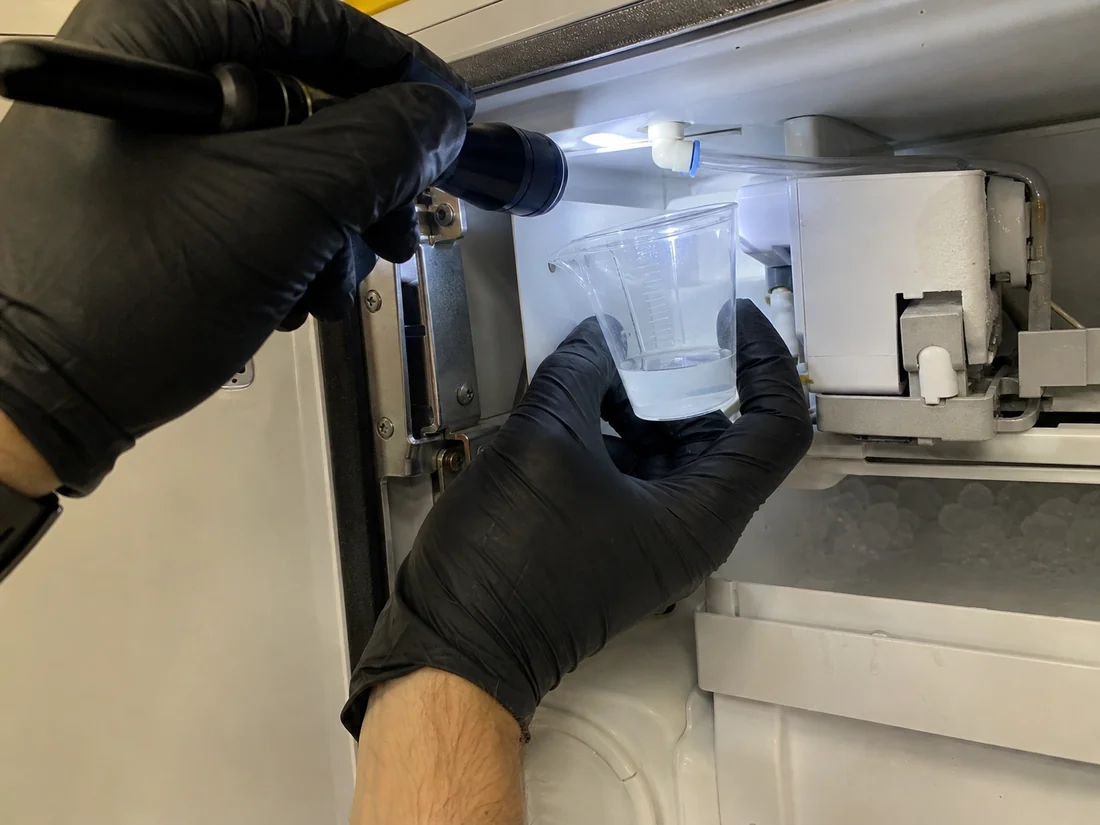
When a Sub-Zero starts leaking, the instinct is to assume the sealed system is failing and a five-figure replacement is coming. It almost never is. In the South Valley the overwhelming majority of floor leaks trace to one of four water paths, and three of the four are bounded, parts-and-labor repairs that have nothing to do with the compressor or refrigerant.
The four places the water actually comes from
1. The defrost drain. Every Sub-Zero refrigerator and freezer defrosts on a cycle, and that meltwater is supposed to run down a small trough, through a drain line, and into a pan near the compressor where it evaporates. When the drain line ices over or clogs, the meltwater backs up, overflows the trough, and runs out the bottom of the cabinet. This is the single most common leak we see, and it is why so many "leaking Sub-Zero" calls in Morgan Hill end with food that is still perfectly cold.
2. The water inlet valve and supply line. If the unit has an ice maker or a dispenser, a fitting, the inlet valve, or the saddle valve at the wall can weep. This leak is steadier and does not follow a defrost cycle — it appears whether the unit is cooling hard or coasting.
3. Door-gasket condensation. A worn or torn gasket lets warm room air leak past the seal. The unit sweats, and that condensation drips down inside the cabinet or runs out the door line, reading as a puddle nobody can explain.
4. The drain pan and overflow. Less often, the pan itself cracks, sits crooked after a unit was pulled and reseated, or simply cannot evaporate fast enough — which is its own clue about airflow at the condenser.
Defrost overflow vs. a supply-line leak
The fastest home triage is timing and location. Mop the floor dry and watch what happens. A defrost leak is cyclical — you will get a dry day, then a fresh puddle a day or two later as the next defrost runs — and it pools front-and-center under the door. Open the freezer and look at the floor and lower back wall: a ridge or sheet of ice sitting over the drain opening is the signature of a frozen defrost drain. A supply-line or inlet-valve leak, by contrast, is a steadier trickle, often shows up behind or to the side of the cabinet near the water connection, and does not wait for a cycle. If you see ice over the drain, you are looking at a drain repair; if you see a wet wall fitting, you are looking at a water-line repair. The ice maker and water-line page covers the supply side in more depth, and persistent hollow or undersized ice cubes often point at the same low-pressure, scaled-valve story.
Why Morgan Hill water makes leaks more likely
South County water is hard. The municipal supply draws from the Llagas groundwater subbasin and carries a real mineral load, and homes on private wells out in San Martin and the unincorporated lots toward the valley edges run harder still. Those minerals do two things to a refrigerator. They scale the water inlet valve until it no longer seats cleanly and begins to weep, and they leave deposits in the narrow defrost drain that help it clog and freeze. We see inlet-valve and drain faults more often on these South Valley supplies than technicians do on the softer water closer to the bay. If your home is on a well off Foothill or out toward the Coyote Valley flats, mention it when you call — it changes what we expect to find.
Why the floor under the unit raises the stakes here
Morgan Hill's estate kitchens — the panel-ready built-ins in Jackson Oaks, the wine-and-prep layouts in Holiday Lake Estates and out on the Paradise Valley hillsides — almost always sit over finished hardwood or engineered wood. A slow defrost overflow that would be a non-event over tile becomes a cupped, blackened plank problem over oak, and because a built-in hides its own base behind a flush kick panel, the water is often working on the subfloor for weeks before anyone sees it. Our dry inland summers make this worse, not better: the surface dries between defrost cycles, so the puddle keeps disappearing while the damage underneath quietly continues. That is the real reason a leaking built-in is worth diagnosing promptly even when the food is still cold.
When it is a bounded, $89-diagnosable fix
The good news dominates this list. Thawing and clearing a frozen defrost drain, replacing a failed drain heater or the small duckbill check valve at the drain mouth, swapping a scaled water inlet valve, or fitting a new door gasket are all defined repairs with a known part and a known labor window. None of them is sealed-system surgery. We charge an $89 diagnostic to confirm the exact source at your kitchen — not over the phone — and that fee goes toward the repair, with a written price before anything is opened up. If the diagnosis ever does point at the sealed system, we will show you the readings rather than guess; that path is covered on the sealed system and compressor page, and a unit that is also loud or buzzing is worth describing when you book.
Before you call
Five safe checks you can do first
- Find where the water starts. Mop the floor dry, then watch where the next water appears. Front-center under the door usually means the defrost drain; behind or beside the cabinet near the water connection means a supply line or inlet valve.
- Check the drain pan and base grille. Pull the lower kick grille and look at the drain pan. A pan that is dry while the floor is wet means water is escaping before it reaches the pan — a drain or trough problem. A pan overflowing means evaporation has stalled.
- Look for ice at the back of the freezer floor. Open the freezer and inspect the floor and the lower back wall. A sheet or ridge of ice over the drain opening is the classic frozen defrost drain — meltwater has nowhere to go and spills forward.
- Inspect the door gasket and for condensation. Run a hand along the gasket for a cold leak or a tear. A gasket that no longer seals lets humid air in, the unit sweats, and that sweat can read as a mystery puddle, especially during a humid spell after irrigation season.
- Trace and shut the water supply if a line is suspect. If you have an ice maker or dispenser and the leak is steady rather than cyclical, find the saddle valve or shutoff behind or below the unit and close it. Stopping the supply isolates a line or inlet-valve leak from a defrost leak before the technician arrives.
None of these requires tools or refrigerant work. They tell us — and you — whether you are looking at a drain, a line, or a gasket before a technician is even dispatched, which usually means a faster, cheaper visit.
FAQ
Leaking Sub-Zero questions
Why is water pooling under my Sub-Zero but the food is still cold?
That combination almost always points at the defrost drain, not the cooling system. The unit is defrosting on schedule, but the meltwater cannot reach the drain pan because the drain line is iced shut or clogged, so it overflows the trough and runs out the bottom. The compartment stays cold because the sealed system is fine — only the water management has failed. It is one of the most common and most bounded leaks we see in Morgan Hill kitchens.
Is the water coming from the freezer defrost or from the water line?
Touch it and look at where it starts. Defrost meltwater is room temperature to cool, appears on a cycle (you will see it return a day after you mop it up), and tends to pool at the front-center under the unit. A supply-line or inlet-valve leak is often a faster, steadier trickle that can show up behind or beside the cabinet near the water connection, and it does not wait for a defrost cycle. If you have an ice maker or dispenser, suspect the line first.
Can hard Morgan Hill water cause my Sub-Zero to leak?
Indirectly, yes. Our Llagas-subbasin groundwater is mineral-heavy, and homes on private wells in San Martin and the unincorporated lots are harder still. Those minerals scale the water inlet valve so it weeps or fails to seat, and they leave deposits that help clog the small defrost drain. Hard water does not create a leak on its own, but it is why we see inlet-valve and drain faults more often here than on softer municipal supplies closer to the bay.
Should I keep using the refrigerator while it leaks?
If the food is still cold and the leak is a slow defrost overflow, you can keep it running while you arrange service, but lay down towels and check under the unit daily so water does not sit on the floor. If water is reaching hardwood, a finished basement-level slab, or the subfloor of a panel-ready built-in over wood, shut off the water supply (for line leaks), pull the unit forward if it is on rollers, and book sooner — standing water under a built-in is a flooring problem long before it is an appliance problem.
How much does it cost to fix a leaking Sub-Zero in Morgan Hill?
Most leaks are bounded repairs. Clearing and thawing a clogged defrost drain, replacing a failed drain heater or a duckbill check valve, or swapping a scaled water inlet valve are all defined, parts-and-labor jobs rather than open-ended sealed-system work. We charge an $89 diagnostic to confirm the source on site, and that fee applies to the repair. You get a written price before any work starts.
We are an independent Sub-Zero repair company serving Morgan Hill and South County and are not affiliated with, authorized by, or an agent of Sub-Zero. Sub-Zero® is a trademark of its respective owner; we diagnose and repair using genuine OEM parts and make no manufacturer-authorized claim.
Related reading for South Valley owners: not cooling or warm, door gaskets and seals, and the South County field notes.
Standing water under a built-in? Don't wait it out.
Tell us where the water shows up and whether the food is still cold, and you'll get a real first read before anyone touches the unit. The $89 diagnostic applies to the repair.