
Both sides of our Jackson Oaks built-in were warming and I was bracing for a compressor bill. He ran pressure and electrical tests before naming anything and proved it was a refrigerant loss, not the compressor itself. I appreciated that he wouldn't quote sealed-system work on a guess.
Thomas E. — Jackson Oaks
Serving Morgan Hill & South Santa Clara County
Sub-Zero built-in refrigeration diagnostics
Pricing ranges are planning ranges until model, access, part availability and measured fault are confirmed.
Technical diagnosis · Morgan Hill, CA
Sub-Zero sealed system & compressor diagnosis in Morgan Hill — leak, refrigerant & EPA-certified repair
Direct answer
If a Sub-Zero in Morgan Hill is cold but never cold enough, or the freezer holds while the fresh-food side drifts up, that pattern can point at the sealed system — but a sealed-system suspicion needs EPA-certified verification before anyone charges you for it. A slow refrigerant leak, a restriction, or a tired compressor read almost identically to a cheap fan fault on the door. We rule out the inexpensive causes first, then confirm refrigerant work with certified instruments and procedures. We also cover San Martin on the same route south. Use the contact page — we'll tell you honestly whether this even sounds like sealed-system work.
How is a Sub-Zero sealed-system or compressor fault confirmed in Morgan Hill?
For a Sub-Zero in Jackson Oaks, Morgan Hill (95038), a sealed-system or compressor suspicion is never named from symptoms. Morgan Hill Sub-Zero Repair rules out a dusty condenser and tired fan first, then proves refrigerant loss with frost and oil patterns and EPA-certified pressure readings. Call (669) 304-2562 before anyone touches refrigerant.
What you can safely check — and where it stops
This page is written like a service note, not a sales pitch, so here is the honest line between the two halves of a sealed-system call. A homeowner can do real, useful triage before a visit, and doing it well sometimes makes the call unnecessary.
- Look at the condenser (behind the lower grille on most built-ins) for a coil packed with dust or pet hair, and vacuum what is reachable. A choked condenser mimics a sealed-system fault perfectly.
- Confirm air can move: nothing stacked on top of the unit, the grille clear, and the cabinet not boxed into a hot, unventilated alcove.
- Check the door seal closes flush — a leaking gasket also looks like "won't get cold enough."
- Read both compartments with a separate thermometer and write down what you see over a day. That log is genuinely useful evidence.
Stops here — technician and EPA-certified only: Do not open, tap, recover or recharge refrigerant; do not test or replace the compressor or its start components; do not work inside the control board or its line-voltage wiring; do not braze or cut sealed-system lines. Refrigerant handling is governed by EPA Section 608, and the compressor circuit, capacitor and board carry stored and line voltage. There is no safe DIY path on refrigerant, sealed-system, compressor-electrical or control-board work — that is the half we do, with the right instruments.
Sealed-system diagnostic matrix
Each row pairs a symptom with the component it might implicate, the test that actually confirms it, the false positive that fools people, and the repair path. None of this is quoted from a symptom alone.
| Symptom | Possible component | Confirmation test | False-positive to avoid | Repair path |
|---|---|---|---|---|
| Cold but never reaches setpoint; runs nonstop | Low refrigerant charge / slow leak | Evaporator temperature read against expected delta, frost-pattern and oil-trace inspection, EPA-certified pressure check | Condenser packed with dust or pet hair causing the same constant-run symptom | Leak location, repair, evacuate and recharge to spec — EPA-certified |
| Freezer fine, fresh-food side warm | Evaporator fan or defrost circuit (not sealed system) | Fan operation and airflow check, defrost cycle verification with a meter | Assuming "warm fridge" means a refrigerant leak | OEM evaporator fan or defrost component — no refrigerant work |
| Partial frost on one section of the evaporator only | Restriction in the sealed system | Temperature split across the coil, frost-line mapping, certified pressure behavior | A normal defrost frost pattern read as a restriction | Locate and clear/replace restricted line section — EPA-certified |
| Compressor hums, clicks, then stops | Compressor start components or seized compressor | Electrical test of start device and windings, current draw under load | Blaming the compressor when the start relay or capacitor failed | Replace start components, or compressor if windings/mechanical fail |
| Unit warm, compressor never starts | Control board or compressor power circuit | Voltage presence at the compressor, board output verification | Calling it a "dead compressor" with no power reaching it | OEM control board or wiring repair — verified by model/serial |
| Oily film or residue near lines/joints | Refrigerant leak at a joint | Visual oil-trace inspection plus certified leak detection | Mistaking lubricant from service history for an active leak | Repair the leaking joint, evacuate and recharge — EPA-certified |
| Condenser fan runs but cabinet stays warm | Condenser airflow or sealed-system heat rejection | Condenser-coil photos, surface temperature readings, airflow check | Replacing the fan when the coil is simply packed with dust or pet hair | Clean coil first; escalate to sealed-system check only if it persists |
| Intermittent cooling that comes and goes | Thermistor/control fault vs marginal charge | Thermistor resistance check, logged temperature behavior, certified pressure read | Charging refrigerant to "top it off" without finding the real fault | Replace failing sensor/board, or address sealed system if confirmed |
Why pulling a built-in for sealed-system access carries risk
Plenty of sealed-system and compressor work means getting at the back or base of the machine, and on a built-in Sub-Zero that can mean walking a heavy column out of a tight, panel-ready opening it was custom-fitted into. In plain terms: the unit is wedged into cabinetry, often with a custom door panel and a water line tied to it, and moving it carelessly can rack the door so it no longer seals, scratch or crack a panel, kink the water line, or stress the cabinet sides. That is the built-in cabinet removal and reseat risk — the repair is on the appliance, but the collateral damage is to the kitchen. What our diagnosis confirms is whether a pull is actually required at all: many sealed-system suspicions are resolved, or ruled out, with the unit in place using temperature reads and certified pressure behavior, so we only stage a pull when the evidence demands it. The honest limitation: until the grille and lower access panel are off and we can see the condenser and line set, we cannot promise from a phone call whether your specific install needs a full pull — access varies unit to unit, and we say so rather than guessing.
Local reality on the Gilroy run
Routing south toward Gilroy shapes how a sealed-system call actually plays out. Many of these are larger semi-rural and ranch-style properties on long private drives, which changes the logistics before anything technical happens: staging a column pull on a narrow approach, protecting a custom panel through a tight doorway, and carrying recovery and charging equipment in all take planning we'd rather do once. The appliances skew older out here too, and an aging Sub-Zero in a hot-summer valley climate is exactly where a marginal charge or a slowly leaking joint finally shows itself — heat load that a newer, well-ventilated install would shrug off. Well water is common on these parcels, and while that is an ice-and-water story more than a refrigerant one, it tells us the home's age and how hard the cold-side has been working. We fold all of that — access, climate, home type, appliance age and the drive itself — into a single staged visit so a Gilroy sealed-system diagnosis doesn't turn into three trips.
Evidence we collect — and the false leads it kills
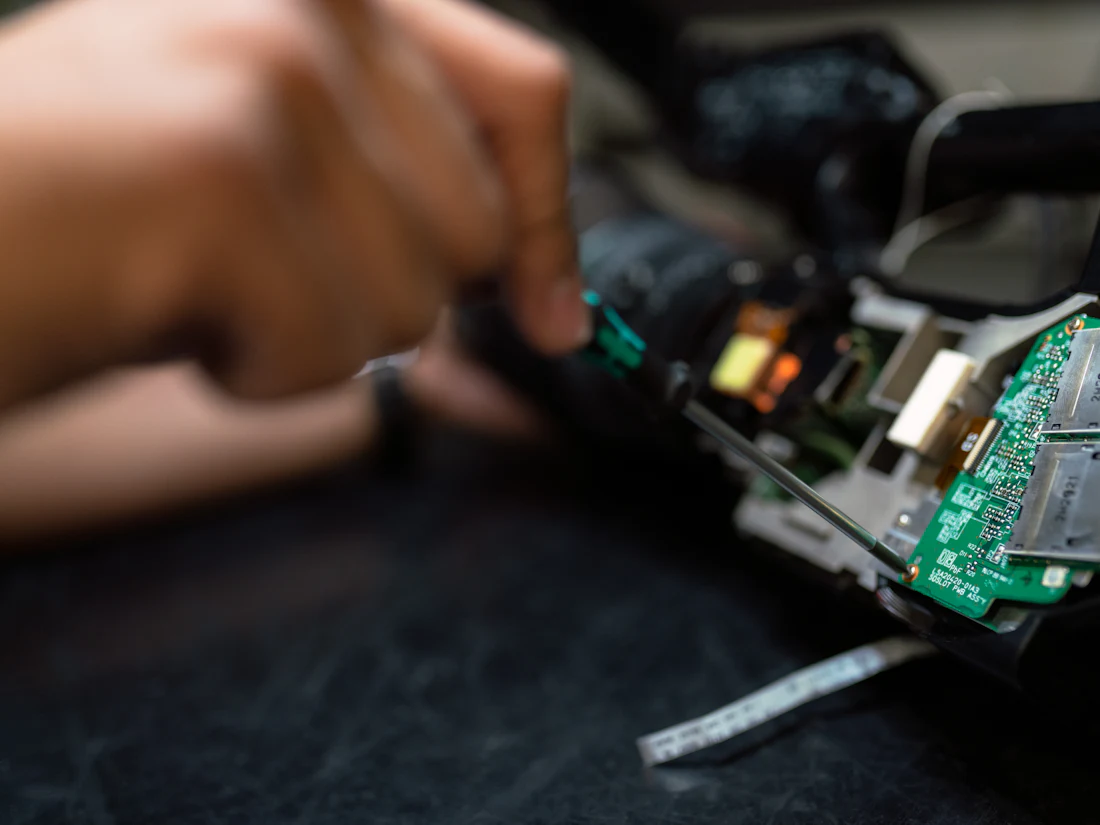
Before the word "compressor" or "recharge" is ever used, we build a file you can see. The classic trap is a condenser coil packed with dust or pet hair: it makes a perfectly healthy sealed system run nonstop and drift warm, and replacing a compressor over it is the most expensive avoidable mistake on this whole page. So the evidence is specifically chosen to separate that — and a failed fan — from a true sealed-system fault. We record temperature readings at the evaporator and across both compartments, take condenser and evaporator photos that show frost lines, oil traces or a clogged coil, capture the model-tag proof that ties the unit to its correct sealed-system and parts spec, and document OEM fan, gasket or control-board evidence when one of those cheaper causes is what's really wrong. Only when every inexpensive explanation is ruled out by that evidence do we escalate to certified pressure verification of the sealed system.

To see how an evidence file like this reads on a finished visit — area, model family, symptom, tests and outcome — browse the Morgan Hill case notes.
How this differs by Sub-Zero model family
Sealed-system behavior, access and parts differ across the line. Exact temperatures, charge weights and code meanings are tied to your serial — where we don't have that verified, we say "verify by model/serial" rather than invent a number.
- Classic / built-in (over-and-under, side-by-side): long-running cabinets where a packed condenser is the first thing to rule out before any sealed-system talk. Pull-and-reseat access and the correct charge spec — verify by model/serial.
- Designer / column (integrated refrigerator and freezer towers): panel-ready and tightly fitted, so the cabinet removal/reseat risk is highest here. Fresh-food-warm-but-freezer-fine is often a fan, not the sealed system. Line set and access — verify by model/serial.
- PRO / pro-style refrigeration: heavier units with model-specific control and alarm behavior; a displayed alarm is not a sealed-system diagnosis on its own and needs verification rather than a generic code lookup — verify by model/serial.
- Undercounter drawers (refrigerator / freezer / wine): compact sealed systems in island and bar locations; tight service clearance and small charge make accurate reading critical. Spec and access — verify by model/serial.
- Integrated wine storage (single and dual-zone): small-load sealed systems where a few degrees of drift may be a thermistor or fan long before it is refrigerant. Confirm the cheap causes first — verify by model/serial.
What sealed-system work actually runs
These are planning ranges for Morgan Hill, not a quote — the real figure is confirmed only after the model, serial and the verified fault. Sealed-system and compressor work is deliberately the most expensive line because it is the only one that involves recovering and recharging refrigerant under EPA rules.
| Work | Typical range |
|---|---|
| Flat diagnostic fee (credited toward repair) | $150-$225 |
| Evaporator or condenser fan motor (often the real cause) | $275-$850 |
| Control board / compressor power circuit | $350-$1,250 |
| Sealed-system / compressor (refrigerant work, the expensive exception) | $1,450-$3,700 |
Because a built-in replacement also means cabinetry and panel rework, the repair-versus-replace math is its own decision — see repair vs replace, and confirm symptoms first on the not-cooling diagnostic.
San Martin and the rest of the route
South of Morgan Hill toward the county line, San Martin sits on our regular run, and it is a useful example of why a sealed-system call is never a phone diagnosis. The mix out there ranges from newer homes with well-ventilated, panel-ready columns to older properties where an aging unit has been quietly working overtime in a warm valley pocket — two very different starting points for the same "won't get cold enough" symptom. We treat San Martin and Gilroy as one planned corridor so the truck arrives staged with recovery and charging gear when the evidence is likely to demand it, and without it when the early signs point at a condenser cleaning or a fan instead. That routing is part of giving you an honest answer instead of an upsell.
Suspect the sealed system? Let's prove it first
Call or book online with the symptom and temperature log ready, and we'll keep the visit focused on whether this sounds like a fan, packed condenser or genuine sealed-system work before anyone touches refrigerant.
Morgan Hill questions about sealed-system and compressor diagnosis
What makes sealed-system and compressor diagnosis different in Morgan Hill?
Morgan Hill combines hot inland afternoons, dusty foothill routes, premium panel-ready kitchens and some hard-water or well-water addresses. For both compartments warming or no frost pattern at the evaporator, that means the first useful checks are temperatures, airflow, water condition and cabinet access before a part is named.
What price range should I expect for both compartments warming or no frost pattern at the evaporator?
For this page's primary scenario, the published Morgan Hill planning range is $1,535-$3,650. A related local check often falls in the $1,545-$3,625 band. Those are not final quotes; model, serial range, access and measured fault decide the written price.
Which readings should I write down before calling?
Write down fresh-food temperature, freezer temperature, display setpoint, ZIP code, model and serial photo, and whether this urgent condition applies: soft freezer food and a compressor running without cold production. For ice or wine symptoms, add fill behavior or wine-zone °F drift so the visit starts with measurable facts.
Can this be diagnosed without pulling the Sub-Zero sealed system out?
Often yes. Many sealed-system and compressor diagnosis checks start from the front: temperature readings, condenser access, door seal checks, fan operation, control history or water fill volume. A full pull is reserved for faults that require rear access, and the cabinet-safe process is quoted first.
When does both compartments warming or no frost pattern at the evaporator become urgent?
It becomes urgent when soft freezer food and a compressor running without cold production. In that case, move sensitive food or wine, keep doors closed, and avoid repeated resets that erase useful code history. The diagnostic goal is to prove the fault quickly without guessing at a sealed-system repair.
Why mention neighborhoods like Holiday Lake Estates?
Neighborhood context is practical, not decorative. Holiday Lake Estates can mean different driveway access, cabinet style, dust load, sun exposure or water quality than a flat in-town route. Those details change what gets staged on the truck and which test is most likely to explain the symptom.
Morgan Hill extractable facts for sealed-system and compressor diagnosis
Citation-ready local range
Typical both compartments warming or no frost pattern at the evaporator work in Morgan Hill is published as $1,535-$3,650 for this page's primary scenario, with this timing plan: 2-6 hours plus parts lead time. The local first check is verified refrigerant loss, compressor electrical fault or heat-stressed condenser in Jackson Oaks or nearby 95037/95038 homes.
| Service / symptom | What is included | Price range | Time |
|---|---|---|---|
| sealed-system and compressor diagnosis / both compartments warming or no frost pattern at the evaporator | model and serial check, independent °F readings, access review for Paradise Valley and Jackson Oaks built-ins | $1,535-$3,650 | 2-6 hours plus parts lead time |
| Sealed-system evidence set | temperature split, frost pattern, electrical checks and EPA-certified verification | $1,545-$3,625 | 2-6 hours plus parts lead time |
| Compressor electrical diagnosis | start components, current draw and control output | $380-$1,210 | same visit if board is stocked |
| Built-in pull and reseat allowance | floor protection, anti-tip release and cabinet reset | $280-$680 | 1-3.5 hours |
Final price changes with model, serial range, part availability, cabinet access and measured fault; in Morgan Hill, heat, dust, hard-water or well-water conditions and panel-ready cabinetry often move the quote.
Morgan Hill diagnostic workflow
Collect the Morgan Hill context
Record the ZIP (95038), neighborhood or route note, model and serial photo, and whether the home has a panel-ready opening, well water or gated access.
Read temperatures before parts
Measure fresh-food, freezer and, when relevant, wine-zone temperatures in °F so both compartments warming or no frost pattern at the evaporator is separated from a display-only complaint.
Check the local stressor first
Inspect verified refrigerant loss, compressor electrical fault or heat-stressed condenser before naming a high-cost part; this is where Morgan Hill heat, dust, water quality and cabinetry change the first test.
Verify the component
Use airflow, meter, pressure, fill-volume or gasket tests on the Sub-Zero sealed system and match parts to the BI-48, 648PRO or 650 serial range.
Quote the repair band
Give a written range and time window before work starts, and flag soft freezer food and a compressor running without cold production as the condition that changes urgency.
Topic-specific service proof
Morgan Hill proof notes for sealed-system and compressor diagnosis
Out in Coyote Estates our long private drive makes service a hassle, but he planned the staging and parts ahead of time. He measured the sealed system properly and was upfront that the repair landed in the expensive range — no surprises, written quote before any work.
Priya S. — Coyote EstatesOur San Martin ranch kitchen had a Sub-Zero that just couldn't hold cold. He showed me the frost and oil patterns at the evaporator that pointed to the sealed system, then walked through repair versus replace honestly. Real evidence, not a sales pitch.
Carl W. — San Martin